
Dr. Marish AsudaniHome / GuidesTry USMLE Vault free
VUSMLE Vault←All guides
USMLE Vault · Step 1

How to Know You're Actually Ready

For IMGs staring at their NBME scores and wondering whether to book. When you book decides as much as what you studied.

By Dr. Marish Asudani · Published · Updated

How do I know if I'm ready to take Step 1?

Read the trend, not a single score. Only NBME 31, 32 and 33 carry a verdict. You are ready when you are above 68% on all 3 of 31, 32 and 33, not your best of 3, and you finish every 20-question block with at least 3 to 4 minutes still on the clock. A single drop to 65% inside an established trend is a bad day. A single spike to 71% while you are stuck at 63–65% is noise, not readiness.

The 5-point readiness checklist is at the end. Scroll to the end for the exact checklist → Scoring above 70%? Why 70% on 1 NBME isn't enough →

The biggest reason most people fail is timing. Not knowledge, not resources, not hours. They attempt the exam before the window they were supposed to be in — or they attempt it long after, having ground themselves down waiting for a certainty that was already there weeks ago.

Both mistakes come from the same place: reading a single NBME score as a verdict. A single score is not a verdict. Here is what actually tells you.

▶How to Pass USMLE Step 1 in 2027, Part 6: how to know you're readyChapter at 12:29.

Your NBME schedule and readiness trend, built for youSet your exam date and the Vault schedule places every NBME, both mock days and the assessment, and tells you what to do after each score. Free for your first 3 days.

Build my schedule →

1. Only 3 forms carry a verdict

NBME 31, 32 and 33 are the only ones whose scores actually matter. You need all 3 above 68%.

Verdict 131Above 68%. Its last 4 blocks go into Mock Exam 1.
Verdict 232Above 68%. Given inside Mock Exam 1.
Verdict 333Above 68%. Given with the Free 120 in Mock Exam 2.

NBME 26 to 30 are training. They tell you how the machinery is running, not whether to book. Full sequence: The exact NBME order →

So don't do this: take one form in the high 60s at NBME 28 and book your date off the back of it. That's a warm-up form telling you a warm-up thing.
And every form counts only if it was offline. NBMEs are always taken offline, timed, 20 questions in 30 minutes a block. The online version gives you 50 questions in 75 minutes and inflates your score by about 4 to 6%, so an online 70% can hide a real 65%. Why NBMEs are always offline →

2. The trend beats the number

What matters is not your score on any 1 form. It is the pattern across the forms — the direction, and how tightly the numbers cluster. 2 students, same last score, opposite verdicts:

Student A — one drop, established trend

NBME 29
68%
NBME 30
70%
NBME 31
69%
NBME 32
73%
NBME 33
65%

READY  5 forms scoring consistently around 68–73%, then 1 that lands at 65–66%. That drop is not a collapse. It means you were a little off on that particular form — a bad block, a heavy biostats run, a rough morning. It does not undo 4 forms of evidence.

What to do: nothing dramatic. Don't move your date, don't rebuild your plan, don't spiral. Review the form, log the misses by system, and go. The pattern already told you the answer.

Student B — one spike, no trend

NBME 29
65%
NBME 30
71%
NBME 31
64%
NBME 32
63%

NOT READY  Scoring 63–65%, with a single form at 71%. That spike is not readiness. One form above the line, surrounded by forms below it, is noise — and it is the single most common reason people book too early.

What to do: treat the 63–65% as the truth and fix the plateau before you go near a date. Stuck at 62–65% — the three moves that break it →
The rule: a score you have hit once is a possibility. A score you have hit consistently is your level. You attempt the exam on your level.
🧭
Whichever side of the line you're on, there's a page for it. Below the bar and stuck for weeks — Stuck at 62–65% on your NBMEs →. Past the bar and want the score to be strong, not just enough — How to score more than 75% on your NBMEs →

Why 70% on 1 NBME isn't enough

If you still believe that more than 70% on your NBMEs is all it takes to pass Step 1, you're sadly mistaken. I wrote a thread on X on the 3 mistakes that fail students who were scoring above 70%. 1 score is not a verdict, and even a good score can be wasted.
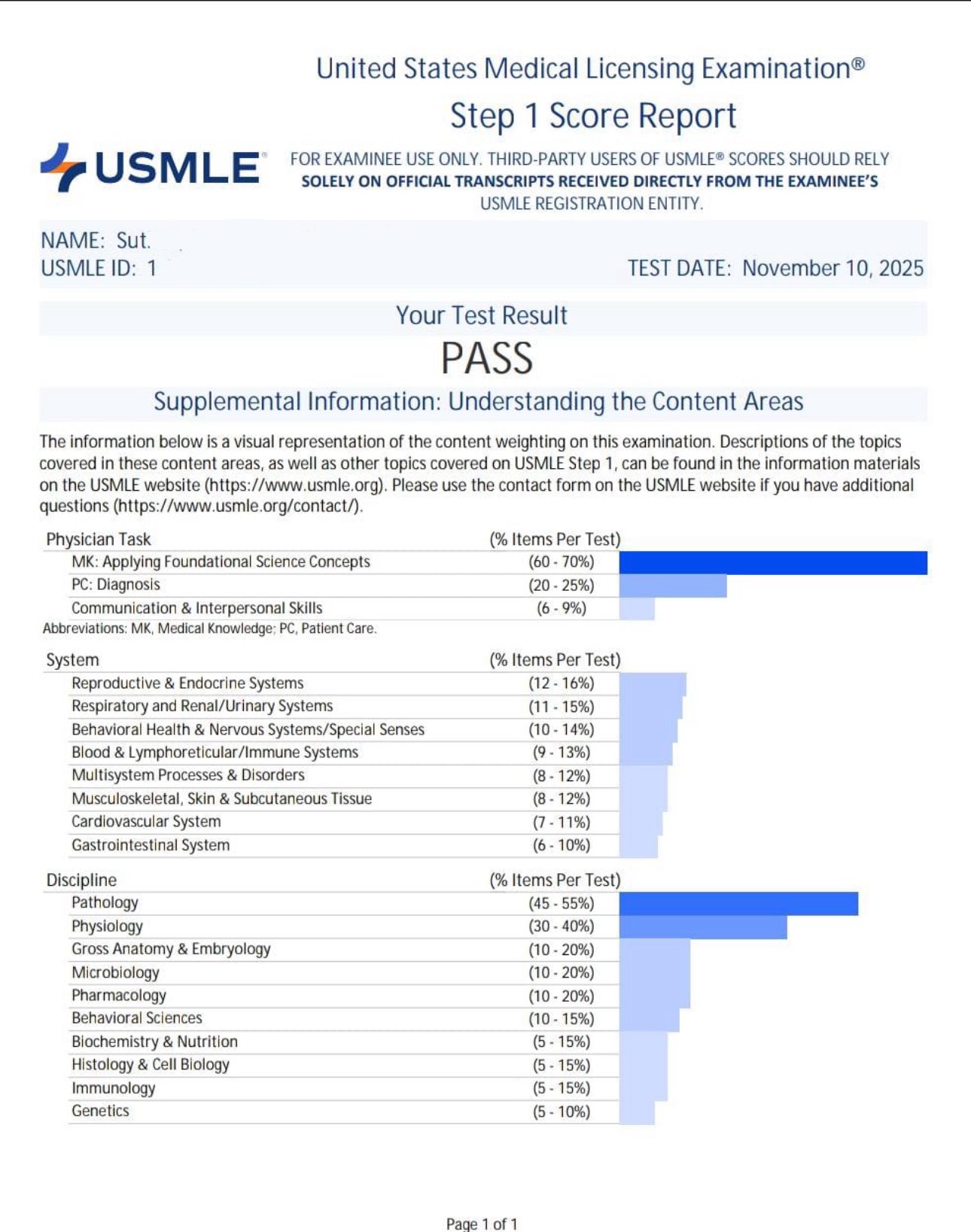
A Step 1 score report showing PASS, test date 10 November 2025, exactly as posted on X: only the start of the first name is visible and the USMLE ID is hidden
The exact screenshot from my X thread: a student's Step 1 PASS. Only the start of the first name shows, and the USMLE ID stays hidden. Read the thread on X →
1
Spacing of NBMEs. A student came to me after failing her Step 1. She was scoring above 75% on her NBMEs. Her last NBME was 15 days before the exam. She stopped solving MCQs and just read, and on exam day the questions hit her like a truck. She panicked and failed. Keep solving blocks right up to the exam. On the Vault plan, your 3 full 280-question days (2 mock exams and the Vault Assessment) fall about 15, 10 and 6 days before the exam, with timed, offline NBME blocks before the first 2. The last month, day by day →
2
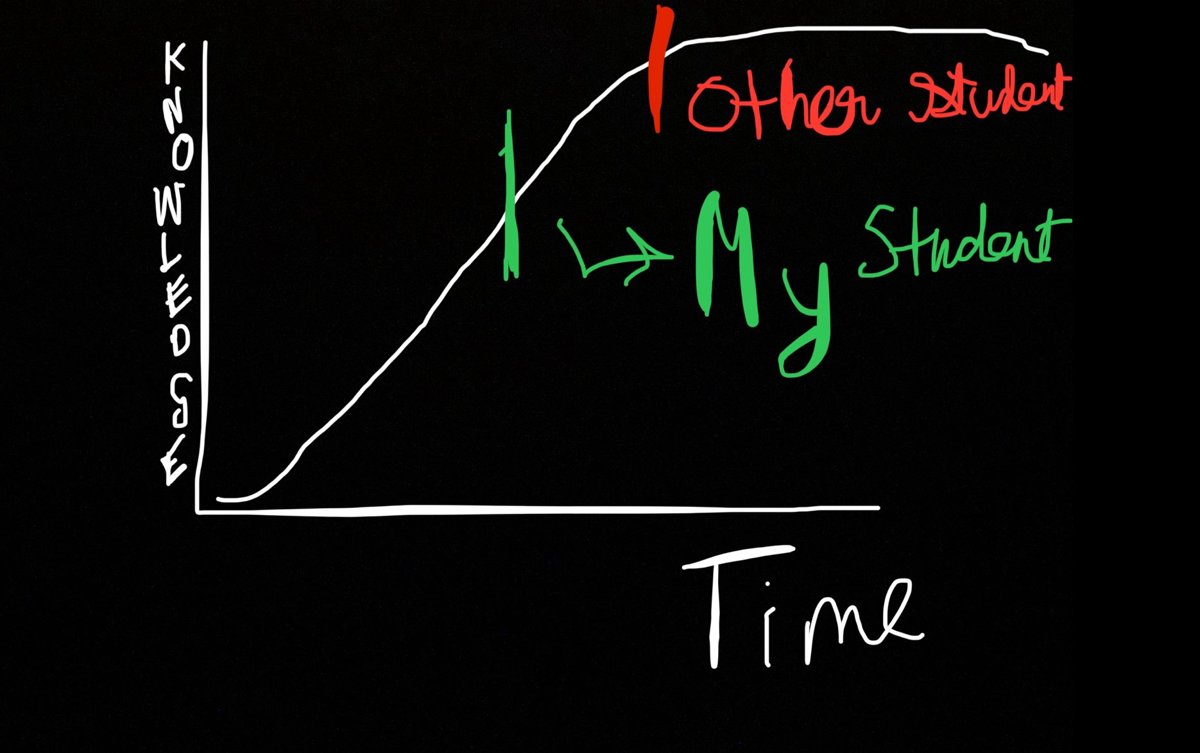
Peaking way before the exam. Read First Aid again and again and you start remembering the pages. You hit your maximum capacity 3 weeks before the exam, and after the peak it's only plateau or downhill. I want you to peak in the exam week. Book your date on the way up, not at the peak. In the last 2 weeks it's recall, not re-reading: the FA Foundation Anki and the Neil Randy PDF. The final 14 days →
Hand-drawn graph of knowledge against time: the curve rises then flattens. My student is marked on the rising part, the other student at the plateau.
From the thread: book on the way up (my student), not at the plateau (the other student).
3
NBME time management. The biggest strategy for your Step 1 is how to manage the time and exactly how to give the NBME. A 70% that uses every second of the block is 1 slower exam away from a fail. My video on exactly how → · The MCQ protocol →

All 3 mistakes with every link, and the 3 tips that prevent them: 3 tips to avoid failing Step 1 →

3. The bar — both halves of it

Readiness is not one number. It is a score condition and a timing condition, and most people only ever check the first one.

1
Above 68%, on all 3 of 31, 32 and 33. 3 out of 3 — not your best of 3. A consistent trend above 68% across the back half of your forms is enough. Consistency is the whole point of the word.
2
Finish every 20-question block with at least 3 to 4 minutes still on the clock. Every block, not your fastest one. The way to get there: a first pass in about 23 to 24 minutes without looking back, then the last 6 to 7 minutes only on the questions you flagged. If you are scoring 68% but using all 30 minutes to get there, you are not ready — you're a slower exam away from losing those points. Pacing is the half of readiness nobody checks. The 4-phase MCQ protocol →
3
At least 1 full 14-block, 280-question day before the real one. An NBME is 200 questions. The real exam is 280, with longer stems. Students who score 68–70% but have only ever taken 200-question forms find the fatigue sets in fast on the day. Give a full-length day: NBME 32 plus 4 blocks of 31, the rest of NBME 33 plus the Free 120, or a Vault Assessment. The Free 120 is realistic practice here, not a predictor: on the Step 1 side, only the NBME 31, 32 and 33 trend predicts. Assessment 2 is free for every signed-in student. The full-length assessments →

Give your 280-question day: the Vault Assessment14 blocks of 20, 30 minutes a block, stems at real-exam length. Raw %, a system-by-system breakdown and an honest pass verdict. Assessment 2 is free.

Start the assessment →
▶Before giving your first NBME, watch this videoMy video: how to give an NBME offline, and the block timing.
Both, or neither. Score without pacing collapses on test day, when the questions run longer and the fatigue is real. Pacing without score is just fast guessing. The students who walk in ready have both, on all 3 forms.

4. The other timing mistake — waiting too long

🚦
If you're hitting 75% or more on 31, 32 and 33 — book it. Soon. That is not "almost there," that is done. Staying in prep past this point does not add points. It adds fatigue, anxiety, and a slow erosion of the confidence you spent 4 months building. Overstudying at this stage costs you score, it doesn't buy score.
What the last stretch is for: consolidation and active recall — not new content. The NBME Booster Anki system by system, the FA Foundation Anki, and the Neil Randy PDF and Mehlman High-Yield Arrows from the Vault University. The Final 14 Days → · The week before Step 1 →

Open the NBME Booster Anki, system by systemForms 20 to 34 and the Free 120 as 1-line cards. This is how the last stretch stays recall, not new content.

Open the Booster →
▶Dr. E passed Step 1 in 4 weeksStudent story, on my YouTube: a trend that climbed, then a pass.

His day-by-day: Dr. E's exact schedule →

5. Where you actually are right now

Your situationDo this next
Just beginning —
no NBME yet
Don't burn a form on a baseline. Finish your systems, get to 60–65% on UWorld, then run the full preparation protocol before form 1. Taking Your First NBME →In the Vault: build your system order in the schedule → · start renal free →
Stuck at
62–65%
This is a strategy problem, not a talent problem. 3 moves break it — new-angle gap closing, the 2 HY PDFs, and the NBME Series deck (the NBME Booster Anki). Break the plateau →In the Vault: open the NBME Booster Anki → · the 2 HY PDFs →
At 68%,
want 75%+
The gap from comfortable to strong is a review-quality and pacing gap, not a content gap. How to score more than 75% on your NBMEs →In the Vault: review every form in the NBME review → · give the Vault Assessment →
Above 75%
on 31, 32, 33
Book the date. Then run consolidation only. The Final 14 Days →In the Vault: FA Foundation Anki → · NBME Images Anki →

The 5-point readiness checklist: the conditions that mean you're ready for Step 1

All 5, and you book. Miss 1, and you're not ready yet. Each one links back to its section above.

  1. You judge only NBME 31, 32 and 33. Everything before them is training. Why →
  2. You're above 68% on all 3. Not your best of 3. The bar →
  3. It's a trend, not a spike. 1 drop in a steady run is a bad day. 1 spike in a run of 63–65% is noise. Trend versus spike →
  4. You finish your blocks with at least 3 to 4 minutes left. The pacing half →
  5. You've given at least 1 full 14-block, 280-question day. Why it counts → · Start a Vault Assessment →
Stop guessing whether you're ready.
Your schedule, your NBME order, your trend line and the Anki decks that move it — all in one place.
Start on usmlevault.com →
usmlevault.com · free for your first 3 days
USMLE Vault · How to Know You're Actually Ready · Created 2026-08-21

Read next

Delete Reddit before Step 1 — why the 60–65% advice on Reddit fails people.

3 tips to avoid failing Step 1 — the bar, the last 14 days, and a full 280-question day.

The week before Step 1 — once you're past the bar.

The month before Step 1 — consistent at 65–68%? The push.

If you failed Step 1 once — find out why first.

The NBME Booster — every topic from forms 20–34 as a tutored one-liner, run system-wise in the final 1–2 weeks.

USMLE Vault Try the Vault free for 3 daysStart free trial
←Back to all guides
Every guide, one appUSMLE Vault · 3 days freeTry free